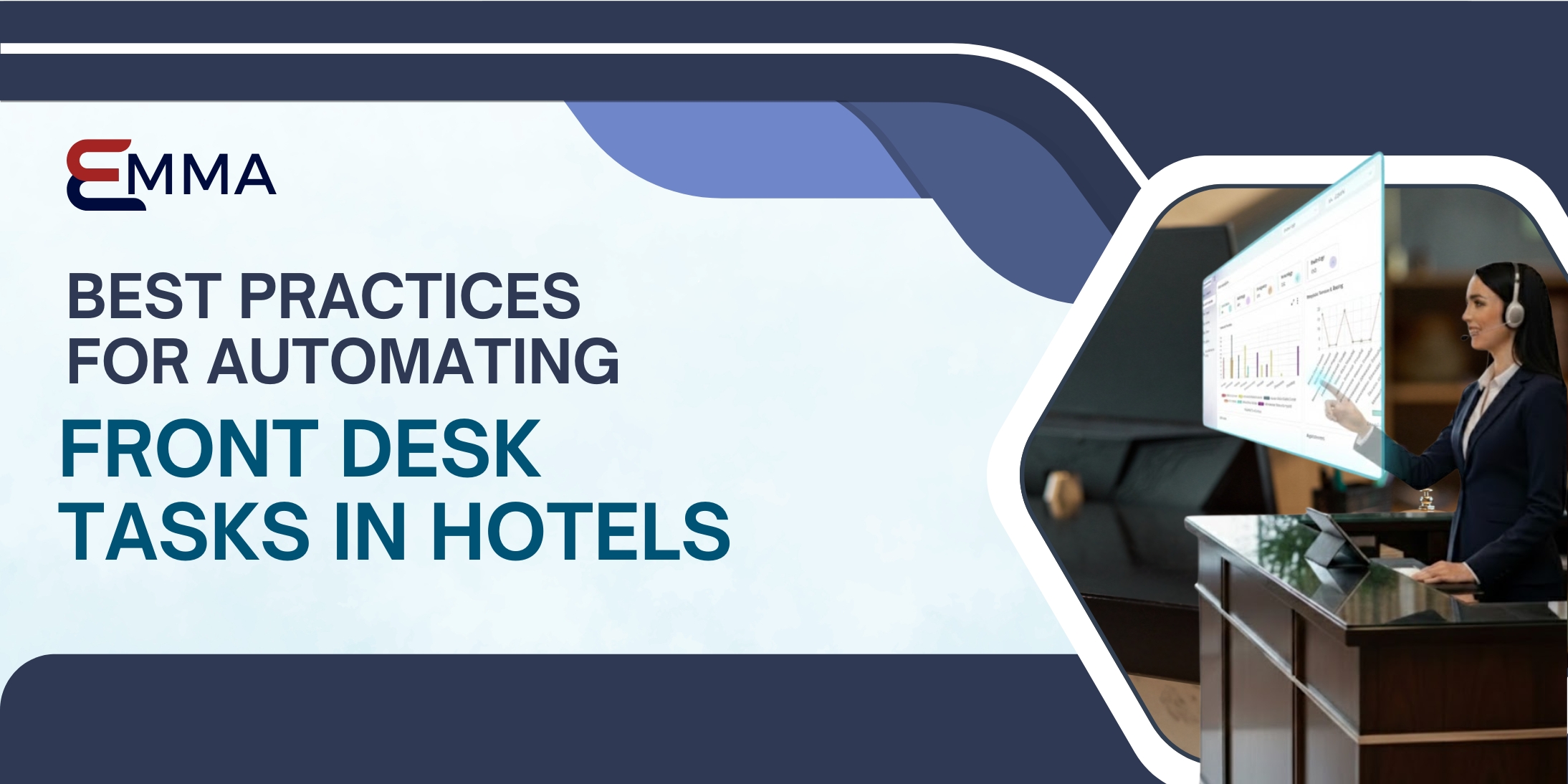
Best Practices for Automating Front Desk Tasks in Hotels
A guest’s first few minutes can define their entire hotel experience. From check-in speed to booking support and personalized communication, today’s front desk is no longer just a reception point. It is the operational center of hospitality. But modern hotels are under pressure. Rising guest expectations, staff shortages, missed booking calls, long queues, and fragmented communication channels are making traditional front desk operations harder to manage. This is why hotels are rapidly adopting front desk automation hotel systems powered by AI receptionist for hotels, virtual hotel receptionist solutions, and AI voice assistant for hotel front desk operations. This is also where EMMA is redefining hospitality.
EMMA combines AI voice automation with Omni Agent intelligence to help hotels automate guest interactions, unify communication across calls, chat, WhatsApp, SMS, and booking channels, and create seamless guest journeys at scale.
For hotels looking for technology to improve hotel guest satisfaction, front desk automation is no longer optional. It is becoming essential.
Why Traditional Hotel Front Desk Operations Are Falling Behind
Managing a hotel front desk manually creates operational friction in a fast-moving hospitality environment.
Common challenges include:
- High guest check-in and check-out volumes
- Peak-hour wait times
- Missed reservation calls
- Human errors in guest data entry
- Staff shortages
- Fragmented guest communication across channels
When guests expect speed, personalization, and convenience, outdated front desk systems can quickly impact customer experience in hospitality industry performance.
Beyond inefficiency, these operational gaps often lead to lost revenue opportunities, inconsistent guest experiences, and lower online review scores. In a highly competitive hospitality landscape, even small front desk delays can shape brand perception.
Best Practices for Automating Front Desk Tasks in Hotels
The best practices for automating front desk tasks in hotels focus on reducing friction while improving guest satisfaction.
Implement Contactless Check-in and Check-out
Modern hotel guest check-in automation systems should include:
- Mobile pre-check-in
- Digital identity verification
- Automated confirmations
- Keyless room access
This reduces lobby congestion, shortens wait times, and creates a smoother arrival experience.
For small properties, these are among the best practices for automating front desk tasks in small hotels where lean teams must deliver premium service efficiently.
Automate Guest Identity Verification
Automated identity verification helps hotels:
- Accelerate check-in
- Reduce fraud risks
- Improve compliance
- Minimize manual workload
This creates both operational speed and stronger guest trust.
Use AI Receptionist and Virtual Hotel Receptionist Systems
AI-powered systems can automate:
- Booking inquiries
- Reservation modifications
- Guest FAQs
- Service requests
- Late-night communication
EMMA’s AI receptionist for hotels ensures no guest inquiry is missed while maintaining consistent, personalized hospitality around the clock.
This 24/7 support agent is especially valuable for hotels aiming to capture bookings beyond front desk hours.
Adopt Omni Agent Communication
One of the most powerful advancements in hospitality automation is Omni Agent technology.
Unlike single-channel tools, EMMA’s Omni Agent unifies:
- Phone calls
- SMS
- Website chat
- Booking platforms
This creates one centralized guest communication ecosystem with a naturalized voice interface.
Key advantages include:
- Faster guest response times
- Unified guest history
- Cross-channel consistency
- Better booking conversion
- Reduced communication gaps
EMMA’s Omni Agent transforms fragmented interactions into one intelligent hospitality journey.
Centralize Guest Data for Personalization
A unified guest profile helps hotels personalize:
- Room preferences
- Loyalty rewards
- Special requests
- Repeat stay experiences
This level of personalization is becoming a major differentiator in customer experience in hospitality industry leadership and providing a white-glove experience.
The Role of EMMA in Hotel Front Desk Automation
EMMA is designed to go beyond basic automation.
It functions as both an AI voice agent in hotels and an Omni Agent platform, helping hospitality brands modernize front desk operations without losing the human touch.
EMMA helps hotels:
- Manage guest inquiries 24/7 without human intervention
- Handle peak-hour booking calls
- Automate multilingual guest communication
- Coordinate across multiple media channels
- Improve staff productivity + reduce human error
- Deliver emotionally intelligent decisions for a white-glove experience
Because EMMA does not rely on fragmented systems, hotels gain one secure, scalable communication layer that supports guest engagement while reducing operational overload.
For boutique hotels, business properties, and enterprise hospitality groups, EMMA offers scalable front desk intelligence built for modern service demands.
Impact of Front Desk Automation on Guest Experience
Hotels adopting AI tools for hotel front desk automation are seeing measurable improvements across both operations and guest satisfaction.
Key business benefits:
- Reduced operational costs
- Faster guest processing
- Fewer missed bookings
- Reduced misunderstandings due to language
- Improved guest satisfaction
- Increased staff productivity
- Greater guest personalization
- Better online reputation
- Increased upselling opportunities
By automating repetitive front desk tasks, hotel teams can focus more on high-value guest interactions that build loyalty and drive the hotel’s vision.
This balance between efficiency and personalization is what defines next-generation hospitality.
PMS Integration and Operational Scalability
No front desk automation strategy is complete without PMS integration.
When automation connects directly with property management systems, hotels can unify:
- Reservations
- Billing
- Room availability
- Housekeeping coordination
- Guest profiles
This creates real-time operational intelligence.
For hotels scaling across locations, PMS-connected automation ensures consistency without sacrificing guest experience quality.
Future of Front Desk Automation in Hotels
The future of hospitality is intelligent, predictive, and guest-centric.
Hotels are moving toward systems that combine:
- AI voice assistants
- Virtual hotel receptionist capabilities
- Omni Agent communication
- PMS integration
- Predictive guest service
- Contactless experiences
Voice-first hospitality, proactive service recommendations, and hyper-personalized guest journeys are rapidly becoming industry standards.
EMMA represents this next generation by helping hotels transform front desk operations into seamless guest experience engines all in one system.
Conclusion
Front desk automation is not about replacing hospitality.
It is about removing friction so hospitality can perform at its best.
By implementing the best practices for automating front desk tasks in hotels, businesses can streamline operations, improve customer experience in hospitality industry performance, and scale service excellence.
From AI receptionist for hotels to EMMA’s Omni Agent-powered guest communication, hotels now have the tools to create faster, smarter, and more personalized guest journeys.
Hotels that modernize today are not just improving operations.
They are shaping the future of hospitality.
Transform Hotel Front Desk Operations with EMMA
EMMA combines AI voice automation, virtual hotel receptionist capabilities, and Omni Agent intelligence to help hotels automate guest communication, streamline bookings, improve operational efficiency, and deliver exceptional guest experiences 24/7.
Because every guest interaction matters, and with EMMA, every first impression becomes a competitive advantage.